Written in a CEO-friendly, reflective tone, as if typed by hand after years of decisions, mistakes, and hard-earned clarity.
Introduction: Smart Investing Is Personal
Smart investing is often presented as a formula. Ratios, models, charts, and forecasts are offered as universal answers. Yet, anyone who has spent enough time allocating capital knows the truth: the smartest investment decisions are deeply personal.
They reflect not only market conditions, but temperament, discipline, experience, and objectives. Making yourself smart investments is not about chasing what works for others. It is about building an approach that works for youóand can survive both success and failure.
This article is written not as a technical manual, but as a reflection shaped by years in markets, boardrooms, and moments when capital was tested.
Redefining What ìSmartî Really Means
In popular culture, smart investing is associated with finding the next big winner. The stock that multiplies, the sector that explodes, the timing that looks perfect in hindsight.
In reality, smart investing is rarely dramatic.
It is consistent. It is disciplined. It avoids irreversible mistakes. It prioritizes sustainability over excitement.
A smart investment is one that still makes sense when conditions change, narratives break down, and confidence fades.
Start With Yourself, Not the Market
Before analyzing a single asset, smart investors analyze themselves.
Key questions include:
How much volatility can I truly tolerate?
What is my time horizon?
Do I need liquidity, or can capital remain locked?
Am I investing for growth, income, or preservation?
Ignoring these questions leads to strategies that look good on paper but fail in execution.
Executives understand this in business strategy. Investments deserve the same self-awareness.
Knowledge Is an Investment
One of the highest-return investments is educationónot generic information, but applied understanding.
Markets reward those who understand what they own and why they own it. Blind diversification and trend-following without comprehension create fragile portfolios.
Smart investors continuously invest time in:
Understanding business models
Reading financial statements
Studying market cycles
Learning from past failures
This knowledge compounds quietly, often revealing its value only during periods of stress.
Simplicity Beats Complexity
Complex strategies often create the illusion of intelligence. Multiple indicators, layered structures, and sophisticated language can impress, but they also increase fragility.
Smart investments are usually simple enough to be explained clearly.
If an investment cannot be articulated without excessive justification, it likely carries hidden risk. Simplicity improves decision-making under pressure and reduces the chance of emotional errors.
In leadership, clarity is strength. In investing, it is the same.
Risk Awareness as Intelligence
Being smart is not about avoiding risk. It is about understanding it.
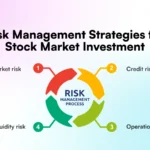
Every investment carries riskómarket risk, business risk, regulatory risk, and behavioral risk. Smart investors identify which risks are being taken and ensure they are compensated appropriately.
They ask:
What could go wrong?
How much can I lose?
Can I recover from this loss?
Intelligence in investing is measured not by gains during favorable periods, but by resilience during unfavorable ones.
The Power of Patience
Patience is an underestimated asset.
Smart investments often look unremarkable in the short term. They require time for value to emerge, strategies to unfold, and compounding to work.
Impatience leads to overtrading, excessive fees, and abandonment of sound plans. Many portfolios fail not because the investments were wrong, but because they were not given enough time.
Patience turns good decisions into great outcomes.
Avoiding the Intelligence Traps
Some of the most costly investment mistakes are made by intelligent people. Confidence, experience, and success can create blind spots.
Common traps include:
Overestimating forecasting ability
Confusing intelligence with prediction
Ignoring contradictory information
Refusing to admit mistakes
Smart investing requires humility. Markets have a way of punishing certainty.
Process Over Outcome
A single successful investment does not prove intelligence. A repeatable process does.
Smart investors focus on decision quality, not short-term results. They understand that even the best decisions can produce losses, and even poor decisions can occasionally succeed.
What matters is consistency over time.
In executive leadership, this distinction is critical. The same principle applies to capital allocation.
Aligning Investments With Life Goals
Smart investments support life, not consume it.
Capital should serve clear objectives: financial security, freedom of choice, legacy, or opportunity creation. When investments are disconnected from real goals, they become sources of stress rather than tools of empowerment.
Clarity of purpose improves discipline and reduces reactive behavior.
Learning From Mistakes Without Repeating Them
Every investor makes mistakes. Smart investors document them.
They analyze what went wrong, whether the error was analytical, emotional, or structural, and adjust accordingly. The goal is not perfection, but progress.
Mistakes become tuition. Ignored mistakes become recurring costs.
The Role of Cash and Optionality
Cash is often dismissed as inactivity. In reality, it represents flexibility.
Smart investors value optionalityóthe ability to act when conditions change. Cash provides stability during volatility and opportunity during dislocation.
Holding cash is not a lack of intelligence. It is strategic restraint.
A CEOís Reflection on Smart Investing
From the executive perspective, smart investments resemble smart business decisions. They are aligned with strategy, measured in risk, and evaluated over time.
They are rarely impulsive. They are rarely crowded. They are rarely obvious in the moment.
Intelligence in investing is revealed not through bold claims, but through endurance.
Final Thoughts: Becoming the Smart Investment
Perhaps the most overlooked idea is this: the smartest investment you can make is in yourself.
Your discipline, your education, your emotional control, and your decision-making framework determine the outcome of every portfolio you touch.
Markets change. Cycles repeat. Narratives fade.
But a smart investor adapts.
Making yourself smart investments is not a destination. It is a practiceóone decision at a time.
Summary:
There is a harsh fact about reality. The good job that you have may not last your entire life or career. The stability of the job may change and the particulars about it may change it to one that is completely undesirable. You must think ahead and plan on making your money work for you. No matter how much you have, you must plan on saving at least three months salary for a rainy day. Additionally you must set aside a proportion of your salary to invest now in well performing …
Keywords:
investment, money, return, wealth, increase, benefit, cash, growth, retirment
Article Body:
There is a harsh fact about reality. The good job that you have may not last your entire life or career. The stability of the job may change and the particulars about it may change it to one that is completely undesirable. You must think ahead and plan on making your money work for you. No matter how much you have, you must plan on saving at least three months salary for a rainy day. Additionally you must set aside a proportion of your salary to invest now in well performing businesses on the stock exchange, as well as through available mutual funds which have a superior performance and you should consider investing in real estate. Particularly you should consider real estate that you can fix up for rental properties.
Stock investment on the internet in one such new technological avenue. Stock brokers have understood long before the public the great advantage that the speed of the internet gave them in financial matters. They offer to the public the advantage of internet sales and buying of company stocks and mutual funds. At least seven years ago the stock market utilized proprietary computers, intranets, wide area networks (WANS) to manage and predict the public sales and purchases of commodities, stocks, and bonds. The market place is a very competitive place. The government and the stock market board exist to provide a fair market where no one person or block of investors have a larger influence than any other. Prior to the internet and the 21st century only large blocks of investors or extremely wealthy ones could purchase stocks and commodities as an investment. This is because they were limited to how small or large a package of stock could be sold. When banks or other groups of investors, retired math teachers, became involved then investment packages could be subdivided smaller. Hence more people could afford to invest their surplus cash into more risky but profitable ventures. The invention of the telegraph allowed the transfer of information at the speed of light. After this the invention of the Teletype maintained the technological edge into most of the 20th century. when the age of the personal computer arrived then financier Mr.Bloomberg advanced both the electronic management of stock but provided the pioneer work to facilitate the inclusion of the internet into the confines of Wall Street.
You can acquire attractive properties which require very little in the way of repair. Some only need cleaning and painting to become profitable rentals. Today in Tulsa, Oklahoma there is a vast excess of available homes which have become available. These are offered by banks, mortgage investment firms, and real estate agencies. On the other hand the reason why these are available should be mentioned. The city of Tulsa has been through a devastating financial depression which began shortly after major internet companies and communications groups went bankrupt. This led to the loss of over 75,000 technical jobs and over $250,000,000 in lost revenues from income and sales taxes. These jobs have not be replaced but have been out sourced to off shore resources. I remember walking several miles along the edge of several housing divisions which were marked by the rarity of an occupied house. Most were marked by the “For Sale” signs and tall unmown grass. There are some real bargains here in Tulsa for those with good salaried jobs! These can become a smart investment for you which has stability and that can increase in profitability over the years

Making Yourself Smart Investments
•

Tinggalkan Balasan