Written in a CEO-friendly, reflective tone, as if typed by hand between meetings, market opens, and late-night reviews.
Introduction: Why Risk Comes Before Return
Every conversation about the stock market eventually turns to returns. How much was made, how fast it grew, and what the upside looks like from here. Yet, seasoned executives and long-term investors know a quieter truth: success in the stock market is defined first by how well risks are managed, not by how aggressively returns are pursued.
This article is not written as an academic guide or a trading manual. It is written from the perspective of experienceóthrough cycles, corrections, bubbles, and recoveries. Managing risk in the stock market is not about eliminating uncertainty. It is about understanding it, respecting it, and positioning capital to survive it.
Understanding Risk Beyond Volatility
Most people associate risk with price swings. When markets move sharply, fear rises. When markets move smoothly, confidence returns. But volatility is only one form of risk, and often not the most dangerous.
Real risk in the stock market includes:
Permanent loss of capital
Overexposure to a single idea or sector
Emotional decision-making under pressure
Liquidity constraints during stress periods
Blind reliance on historical performance
Executives who manage businesses understand operational risk intuitively. Market risk deserves the same level of structured thinking.
The Illusion of Control
One of the most dangerous phases for investors is prolonged success. When markets rise steadily, risk feels distant. Decisions feel validated. Leverage quietly increases, position sizes expand, and discipline erodes.
The stock market has a way of reminding participants that control is always partial.
No model can fully anticipate geopolitical shocks, regulatory shifts, technological disruption, or sudden changes in investor psychology. Risk management begins by accepting this limitation.
The goal is not to predict every outcome, but to remain solvent and rational across many outcomes.
Position Sizing: The Silent Risk Manager
In practice, risk is often decided before a trade or investment is even made. Position sizingóhow much capital is allocated to a single stock or themeóis one of the most powerful, yet overlooked, tools in portfolio management.
A great idea sized too large becomes a bad decision.
Professional investors often survive not because they are right more often, but because their mistakes are small enough to recover from. Limiting exposure ensures that no single position can define the fate of the entire portfolio.
From a CEOís perspective, this is no different from revenue concentration risk. Dependence on a single client is dangerous. Dependence on a single stock is no different.
Diversification: Protection, Not Performance
Diversification is frequently misunderstood. It is not designed to maximize returns during bull markets. It is designed to prevent catastrophic losses during bear markets.
True diversification considers:
Industry exposure
Geographic exposure
Market capitalization
Correlation during stress
Owning many stocks is not the same as being diversified. In times of crisis, correlations rise, and portfolios that appeared balanced can suddenly behave like a single trade.
Risk-aware investors build portfolios with this reality in mind.
Liquidity Matters More Than Optimism
Liquidity is rarely discussed when markets are calm. It becomes painfully relevant when markets are not.
Stocks that are easy to enter can become difficult to exit during periods of panic. Wide bid-ask spreads, halted trading, and forced selling amplify losses.
Managing risk means favoring instruments and markets where liquidity remains reliable, even under stress. This often means accepting lower upside potential in exchange for flexibility and control.
In business, cash flow keeps companies alive. In investing, liquidity serves the same function.
Emotional Risk: The One No One Models
Spreadsheets do not panic. People do.
Fear and greed remain the most consistent drivers of market extremes. Investors abandon long-term plans at the worst possible moments, not because the plan was flawed, but because emotion overwhelmed discipline.
Risk management systems fail when human behavior is ignored.
Experienced investors design rules that protect them from themselves:
Predefined exit criteria
Maximum drawdown limits
Cooling-off periods after losses
The strongest edge in the stock market is not superior informationóit is emotional control.
Time Horizon as a Risk Tool
Risk looks different depending on time horizon. Short-term price movement is noise to a long-term investor, while long-term structural decline is irrelevant to a short-term trader.
Problems arise when time horizons are mixed.
Buying stocks with a long-term thesis but reacting to short-term volatility creates unnecessary risk. Managing risk requires alignment between strategy, expectations, and patience.
Executives understand this well in corporate planning. Strategic investments are not evaluated quarter by quarter. Portfolios deserve the same clarity.
The Role of Cash
Cash is often viewed as unproductive. In reality, it is optionality.
Holding cash reduces portfolio volatility, provides flexibility during market dislocations, and creates psychological comfort. It allows investors to act when others are forced to react.
In risk management, doing nothing is sometimes the most strategic decision available.
Learning From Market Drawdowns
Every major market drawdown carries the same message: risk was underestimated.
Post-crisis analysis often reveals familiar patternsóoverconfidence, leverage, concentration, and complacency. Managing risk in the stock market means studying these periods not with hindsight arrogance, but with humility.
The question is not whether drawdowns will happen again. It is whether portfolios are built to withstand them.
Communication and Expectation Management
For executives managing capital on behalf of others, risk management extends beyond portfolio construction. Communication matters.
Clear explanation of strategy, potential drawdowns, and risk controls builds trust. Silence during volatility destroys it.
The best managers do not promise smooth returns. They promise disciplined process.
What Risk Management Is Not
Managing risk is not:
Avoiding losses entirely
Predicting market tops and bottoms
Eliminating uncertainty
It is about making uncertainty survivable.
Losses are part of investing. Unmanaged losses are what cause failure.
A CEOís Perspective on Market Risk
From the executive chair, risk is part of every decision. Expansion, hiring, acquisitionsóall involve uncertainty. The stock market is no different.
What separates successful leaders and investors is not fearlessness, but preparation.
Risk management is not a defensive posture. It is a strategic advantage.
Final Thoughts: Staying in the Game
The stock market rewards patience, discipline, and humility over time. Managing risk is what allows those qualities to compound.
Capital that survives downturns is capital that can participate in recoveries. Investors who respect risk stay in the game long enough to benefit from opportunity.
In the end, managing your risks in the stock market is not about avoiding storms. It is about building a vessel strong enough to sail through them.
Summary:
Whenever you invest your money in the stock market, you take on a certain amount of risk. While there is no way to get around that risk, it is possible to manage your risk by educating yourself before you start trading.
Keywords:
stock
Article Body:
Whenever you invest your money in the stock market, you take on a certain amount of risk. While there is no way to get around that risk, it is possible to manage your risk by educating yourself before you start trading.
One of the most important things to remember about any investment, is that if your capital is borrowed, you take on an even greater risk than the actual investment itself. It is never a good idea to borrow, either from a lending institution or from your credit cards, to come up with the money you need for any particular investment. This maximizes your risk in that, if the investment doesn’t pan out, you will still have to repay the amount you borrowed, and may even have to pay penalties depending on your financial position and ability to repay.
Make sure that before you start trading, you have planned ahead and set aside the capital you will need to invest. This will eliminate that third party, and ensure all of your profits will go in your pocket, and not some bank’s ledger. Keep in mind, though, not only will you need the money for your capital, but also for the most expensive part of the stock market – brokers fees.
While each broker will have different rates, most charge a flat fee per trade. These flat fees make it much easier to see a return on your investment much sooner than you would with a variable rate. This also means that, if you are starting with a fairly large investment of perhaps $10,000, and the brokers trading fee was a $100 flat rate per trade, you would only have to see a one percent return to break even. Of course the reverse is also true, in that if you are starting with a smaller investment of only $1000 or so, you would have to see at least a ten percent return to do the same.
Your rate of return will also depend on whether you are investing in a short term or long term system. In a short term system, you will have many more trading fees, since it is based on the buy low, sell high, do it now philosophy. With a long term system, however, you will incur far fewer trading fees due to the fact that with a long term investment, you are investing in the future viability of a company, rather than in an immediate merger or other change.
Managing your money wisely will help to manage your risk. But it is important to remember that even when your monetary risk has been considered, there is always the market risk. That is to say that there is always the chance that when you invest in the stock market today, there is no guarantee that the market will exist tomorrow. There are no guarantees in stock market trading, and there is no way to eliminate your risks entirely. But with good financial planning, and a little common sense, stock investments can be a wonderful way to provide money for your future.
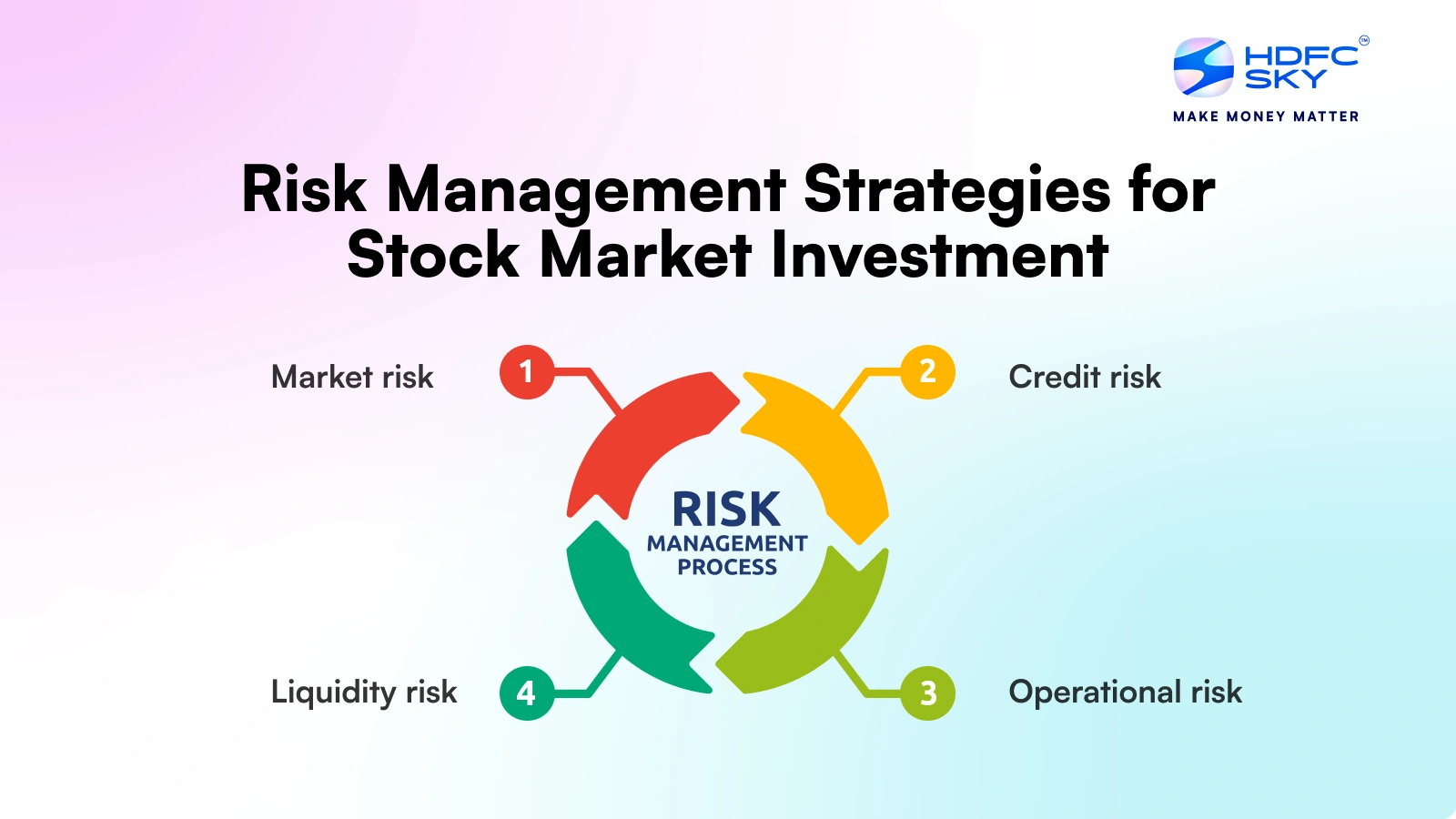
Managing Your Risks In The Stock Market
•

Tinggalkan Balasan